



KEYWORDS: Epidemiological Investigation; Chickenpox; Viral outbreak; Vaccination; Post-exposure prophylaxis
INTRODUCTION
Chickenpox is the result of primary infection with the Varicella-zoster virus (VZV). Primarily, the infection is acquired through the airborne route. The skin vesicles of patients with varicella are full of highly infectious virions.1 The infection is usually self-limiting in children, but it can have a more serious clinical course in adults, immunocompromised, sick and debilitated long-term care patients. Nosocomial outbreaks involving healthcare workers (HCWs) are being increasingly reported from diverse settings in India.2
In a study conducted at a tertiary care hospital, eight cases of Varicella were identified among 181 individuals exposed to the index case, highlighting the potential for rapid transmission in hospital environments.3 In another outbreak investigation, thirty-one HCWs were identified as contacts, of whom three were found to have no evidence of immunity to VZV. Despite post-exposure vaccination, two of these susceptible HCWs subsequently developed chickenpox shortly after receiving the first dose of the varicella vaccine, underscoring the high transmissibility of the virus and the importance of early identification and preventive measures in healthcare settings.4
In high-income countries, robust vaccination programs and stringent infection control protocols have largely mitigated the nosocomial epidemic due to VZV. However, in India, where universal varicella vaccination is not yet mandated, an outbreak with VZV poses serious risks with a higher proportion of susceptible adults. Standardised protocols for outbreak investigations and data on structured outbreak investigations for a healthcare-associated varicella outbreak from an Indian healthcare setting remain limited. The absence of such knowledge makes an outbreak investigation a reactive rather than proactive management. This report describes the epidemiological characteristics, control measures, and outcomes of a healthcare-associated varicella outbreak in a tertiary care teaching hospital in North India and the description of ‘V-OUTBREAK SOP’ model for the use in similar outbreaks.
METHODOLOGY
Setting and study period
The outbreak occurred in the Department of Internal Medicine of a tertiary care teaching hospital between 02 November 2025 and 19 January 2026.
Outbreak recognition
The outbreak was suspected following the identification of a hospitalised patient with fever and generalised vesicular rash consistent with varicella (Figure 1). According to the Centers for Disease Control and Prevention (CDC), an outbreak is defined as the occurrence of more cases of a disease than expected in a defined population, geographic area, or time period.5 The diagnosis was made clinically based on the classical clinical presentation. Laboratory confirmation was not performed due to typical clinical features and logistical constraints.

Figure 1: Photograph of the patient showing confluent vesicular rashes across the face with crusting and erosions
Outbreak response
A multidisciplinary outbreak response team comprising an infectious disease physician, an intensive care unit (ICU) physician, an infection control nurse (ICN), residents, and senior nursing officers was constituted.
In the absence of national guidelines specific to healthcare-associated varicella outbreaks, the Centre for Disease Control and Prevention outbreak investigation principles were adopted as a framework.
Investigation procedure
The following steps were undertaken:
Institution-wide notification and enhanced surveillance (Figure 2).
Development of a clinical case definition: a probable case was defined as any HCW presenting with an acute onset fever with vesicular rash between 02/11/2025 to 19/01/2026, with epidemiological linkage to the index case.
Active case finding among HCWs in affected units. This was done by actively following up on all the daily details of the Internal Medicine outpatient department, and the Emergency Medicine patient details.
Detailed contact tracing by telephonic conversation with all the cases and preparation of a line list.
Assessment of prior history of varicella infection and vaccination among all the cases and contacts by individual interview – in person and telephonically.
Stratification of exposed HCWS into immune and non-immune categories based on the details shared by the contacts.
Administration of post-exposure prophylaxis (PEP) as indicated (vaccination, antivirals (Acyclovir or Valacyclovir), or Varicella Zoster Immune Globulin, Human (VariZIG) to all those who are immune naive to Varicella zoster virus.
Isolation of confirmed cases at home until lesions are completely crusted and ensuring adherence to isolation through daily telephonic reassurance and close follow-up of suspected cases for symptoms.
Temporary exclusion of affected HCWs from duty during the infectious period.
Surveillance for new cases through the maximum incubation period.

Figure 2: Photograph of the institution-wide circular notifying the Varicella zoster outbreak and outbreak investigation
Statistical analysis Data is recorded using a Microsoft Excel Sheet. Data is presented with frequencies and percentages. Descriptive statistics are presented with mean and standard deviation. A line list was prepared based on the data.
RESULTS
A total of eight cases of varicella were identified during the outbreak period. This included:
One index case (12.5%)
Two primary cases (25%)
Five secondary cases (62.5%)
The pattern was consistent with propagated transmission.
A total of 110 HCWs were assessed for exposure, of which 82 had contracted chicken pox in the past, and 6 had received the vaccination. The primary attack rate among susceptible contacts of the index case was 40%, while the secondary attack rate among susceptible contacts of primary cases was 50%. No tertiary transmission occurred (tertiary attack rate: 0%). The line list is shown in Figure 3.
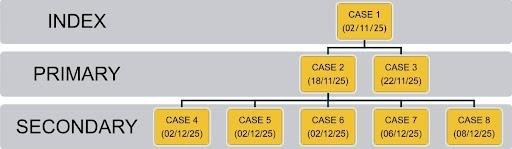
Figure 3: Line list prepared for the outbreak investigation of varicella
The outbreak was initiated by a hospitalized patient who served as the index case, presenting with fever and vesicular rash on the face consistent with varicella. Following exposure to the index case, two HCWs developed symptoms during the subsequent incubation period and were identified as primary cases. A total of eight cases of varicella were identified during the outbreak period. This included one index case and seven HCWs who developed varicella infection following exposure within the hospital. The diagnosis of all the cases were made clinically, based on classical presentation with fever and generalized vesicular rash, and no laboratory confirmation was performed. None of the cases required hospitalization. Antiviral therapy was administered to all affected individuals and isolation was maintained until complete crusting of lesions. One HCW developed post-herpetic neuralgia while the remaining cases recovered without sequelae. The epidemiological pattern suggested a propagated outbreak with transmission occurring within the healthcare setting. The transmission chain and chronological distribution of cases are illustrated in Figure 4.
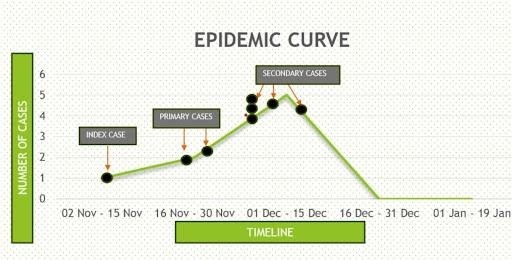
Figure 4: Epidemic curve showing the temporal distribution of varicella cases during the outbreak investigation from 02 November 2025 to 19 January 2026.
The index case was a hospitalized patient, while all subsequent cases occurred among HCWs with documented exposure within the hospital setting, indicating a nosocomial transmission. Among the seven healthcare workers affected during the outbreak, the mean age was 27.7 ± 2.6 years, with an age range of 23–30 years. Males constituted 5 (71.4%) of cases, while females accounted for 2 (28.6%). Nursing officers represented the majority of affected healthcare workers. Fever and generalised vesicular rash were present in all the affected HCWs (100%), with face and trunk involvement observed in all patients. Limb involvement was noted in 5 (71.4%) of the HCWs. One healthcare worker (14.2%) reported a prior history of varicella infection, while one individual developed post-herpetic neuralgia as a complication. All affected individuals received antiviral therapy and were isolated promptly, and six HCWs (85.7%) recovered without complications. The exposed individuals, who were deemed to be non-immune were advised postexposure prophylaxis with valacyclovir 1 gm thrice a day for 7 days.
The last case was identified on 08 December 2026; hence outbreak was declared off 42 days from this date as per CDC guideline. No additional cases were detected during subsequent surveillance.
MICU: Medical Intensive Care Unit; HDU: High Dependency Unit; HIV: Human Immunodeficiency Virus; NA: Not Applicable; AIIMS: All India Institute of Medical Sciences; HIC: Hospital Infection Control
The index case was a hospitalized patient, while all subsequent cases occurred among HCWs with documented exposure within the hospital setting, indicating a nosocomial transmission. Among the seven healthcare workers affected during the outbreak, the mean age was 27.7 ± 2.6 years, with an age range of 23–30 years. Males constituted 5 (71.4%) of cases, while females accounted for 2 (28.6%). Nursing officers represented the majority of affected healthcare workers. Fever and generalised vesicular rash were present in all the affected HCWs (100%), with face and trunk involvement observed in all patients. Limb involvement was noted in 5 (71.4%) of the HCWs. One healthcare worker (14.2%) reported a prior history of varicella infection, while one individual developed post-herpetic neuralgia as a complication. All affected individuals received antiviral therapy and were isolated promptly, and six HCWs (85.7%) recovered without complications. The exposed individuals, who were deemed to be non-immune were advised postexposure prophylaxis with valacyclovir 1 gm thrice a day for 7 days.
The last case was identified on 08 December 2026; hence outbreak was declared off 42 days from this date as per CDC guideline. No additional cases were detected during subsequent surveillance.
DISCUSSION
This study examines the epidemiological characteristics, control measures, and outcomes of a varicella outbreak investigation. In healthcare settings, varicella outbreaks in tertiary care hospitals among HCWs pose a significant risk for rapid nosocomial transmission. Consequently, a swift initial response, specifically establishing a clear case definition and a formal outbreak declaration, is critical. In this instance, issuing an institution-wide circular not only raised awareness among HCWs but also facilitated more efficient active case-finding.
The incubation period (IP) for varicella typically ranges from 10 to 21 days; accordingly, active and passive surveillance were maintained for two full IP (42 days) without new cases to confirm the outbreak’s end6. Defining this window was essential for determining quarantine durations and mapping the propagation pattern. Our investigation traced the transmission from the index case to secondary cases, noting that most of the secondary cases originated from a single primary case. This highlights the influence of occupational roles and exposure intensity. Occurrence of all new cases fell strictly within the pre-defined IP, which helped in easy identification of cases and to establish adequate prevention measures. Early recognition, systematic contact tracing, prompt isolation, and Post-Exposure Prophylaxis (PEP) effectively interrupted the chain of infection, emphasized well with the absence of tertiary transmission in our scenario.
The secondary attack rate (SAR) was 50%, with nursing officers comprising the majority of those affected. While varicella is a highly contagious pathogen typically associated with a high secondary attack rate of 70-90% in susceptible siblings within a household, the rate in this study was comparatively lower than expected7. This reduction is likely attributable to high baseline immunity among contacts, resulting from both prior natural infection and previous vaccinations. Furthermore, since the cohort consisted of HCWs, the implementation of PEP using antivirals was strictly and effectively followed (100% of immune-naive HCWs took PEP)6,8.
An important observation was that none of the affected HCWs had prior training in transmission-based precautions, although 3 out of the 7 had received standard precaution training. This lack of specialised training, not only facilitates “patient-to-HCW” transmission but also enables HCWs to become involuntary vectors, carrying the virus on contaminated skin or clothing to other immunocompromised or immune-naive patients and HCWs. While no additional patients developed the disease during their hospital stay, the post-discharge status of patients remained beyond the scope of this investigation.
The lack of training for every HCW highlights the need to form separate training modules for transmission-based precautions. Without this, HCWs often default to standard hygiene, leaving them dangerously unprotected against the aerosolised particles and respiratory droplets that define varicella’s primary spread. By equipping the workforce with these specific competencies, a facility can prevent HCWs from becoming involuntary vectors, thereby protecting immunocompromised patients. Prevention of cross-contamination is to be ensured with staff having documented immunity should provide direct care, and all personnel entering the room must don an N95 respirator, gown, and gloves, and using dedicated medical equipment (such as disposable stethoscopes).
In resource-limited settings, the infrastructural limitations can hamper the routine surveillance and can hinder any successful outbreak investigations. A rapid investigation is essential to prevent localised clusters from overwhelming limited hospital capacity and causing mass casualties. These investigations should be aimed at producing local and regional data to bypass “one-size-fits-all” global policies. This can help competent authorities to target scarce resources, namely vaccines, protective equipment, and training, to reduce transmission. The mapping of transmission chains and sources cab help in providing an evidence-based foundation for changes in the system like improved sanitation or mandatory staff training, which can help towards long-term epidemic preparedness.
In addition, HCW immunity plays an indispensable role in interrupting the transmission pathways of varicella within clinical settings9. In many developing nations, a substantial proportion of healthcare workers (HCWs) remains susceptible to varicella, a vulnerability largely driven by the absence of universal vaccination mandates and inadequate records of prior infection 10.
This study highlights the need for a structured standard operating procedure (SOP) for outbreak investigation in resource-limited settings, prioritising rapid communication and systematic contact tracing. These SOPs can serve as a guide for a high-impact, low-cost methods that is both feasible and effective. The SOP serves to bridge the gap between limited infrastructure and the need for a structured and precise epidemiological response. We have developed a structured SOP, ‘V-OUTBREAK SOP’, that can be used in Indian hospital outbreaks of varicella ahead (Table 2); also, similar SOP can be used for other outbreaks with necessary modifications.
Table 2: Standard operating procedure and checklist (‘V-OUTBREAK SOP’) for investigation and containment of varicella outbreaks in tertiary healthcare settings, developed based on findings from the present outbreak investigation.
LIMITATIONS
Laboratory confirmation was not performed as all cases demonstrated classical clinical features with clear epidemiological linkage within a well-defined transmission chain, and priority during the outbreak response was directed toward rapid containment measures. The possibility of recall bias among participants cannot be excluded, as exposure history and prior infection or vaccination status were partly based on self-reporting. The source of infection for the index case could not be definitively established; however, reactivation of latent infection secondary to the patient’s immunocompromised state was considered the most likely explanation. Additionally, due to high clinical workload and limited manpower, follow-up of asymptomatic exposed contacts outside hospital premises was restricted.
CONCLUSIONS
A healthcare-associated varicella outbreak in a tertiary care hospital was successfully contained through early recognition, structured investigation, contact tracing, prompt isolation, and targeted post-exposure prophylaxis. No tertiary transmission occurred, and all cases recovered. Institutional SOPs (‘V-OUTBREAK SOP’ model) and regular training in transmission-based precautions are essential to prevent similar outbreaks in healthcare settings.
ACKNOWLEDGEMENT
The authors would like to acknowledge the valuable support of the residents and staff of the Department of Internal Medicine, AIIMS Rishikesh, for facilitating the outbreak investigation. We sincerely thank the Infection Control Team, nursing officers, and resident doctors who assisted in contact tracing, surveillance, and implementation of infection control measures during the outbreak. Their timely cooperation and dedication were instrumental in the successful containment of the outbreak. We also would like to extend our gratitude to all Varicella affected HCWs, index patient and all exposed HCWs to give their contact tracing data, valuable time to analyse the outbreak and contain the outbreak with time.
CONFLICTS OF INTEREST STATEMENT
The authors declare no conflicts of interest.
SOURCE OF FUNDING
No funding was used for this study
ETHICS STATEMENT INCLUDING PATIENT CONSENT
Not applicable
AUTHOR’S CONTRIBUTION
AG: Data collection, Data curation, Methodology, Formal Analysis, Writing original draft, Writing – review & editing.
GH: Data collection, Methodology, Formal Analysis, Writing original draft, Writing – review & editing.
BJS: Data collection, Methodology, Project Administration, Writing – review & editing.
MG: Data collection, Methodology, Project Administration, Writing – review & editing.
PKP: Conceptualization, Data curation, Supervision, Project Administration, Writing – review & editing.
AK: Visualisation, Data curation, Methodology, Formal Analysis, Project Administration, Supervision, Writing original draft, Writing – review & editing.
AI DECLARATION
No AI tool was used to generate research data, perform data analysis, interpret findings, formulate scientific conclusions, or make editorial decisions. All AI-assisted content was critically reviewed, verified, and revised by the authors. The authors take full responsibility for the accuracy, originality, integrity, and final content of the manuscript.
REFERENCES
-
-
Dooling K, Marin M, Gershon AA. Clinical manifestations of varicella: disease is largely forgotten, but it’s not gone. J Infect Dis. 2022 Oct 21;226(Suppl 4):S380-S384. doi:10.1093/infdis/jiac390. PMID: 36265857. PMCID: PMC10205892.
-
Yang J, Liu J, Xing F, Ye H, Dai G, Liu M, Lo SK, Lau RW, Chiu KH, Chan JF, Yuen KY. Nosocomial transmission of chickenpox and varicella zoster virus seroprevalence rate amongst healthcare workers in a teaching hospital in China. BMC Infect Dis. 2019 Jul 5;19(1):582. doi:10.1186/s12879-019-4222-x. PMID: 31277589. PMCID: PMC6612143.
-
Singh H, Pandya KH, Bhatti VK, Lathwal S, Kumar M. Outbreak control of hospital-acquired varicella infection amongst health care workers in a tertiary care hospital. Med J Armed Forces India. 2022;78(2):136-139 DOI: 10.1016/j.mjafi.2019.12.004
-
Saksena R, Thomas BJ, Das R, Nagpal S, Suri PR, Wadhwa RK, et al. Varicella zoster virus outbreak in a long-term care unit of a tertiary care hospital in northern India. Epidemiol Infect. 2024;152:e81 DOI: 10.1017/S0950268824000712
-
Centers for Disease Control and Prevention. Principles of epidemiology in public health practice. 3rd ed. Atlanta: CDC; 2012 https://stacks.cdc.gov/view/cdc/6914
-
Saleh HM, Ayoade F, Kumar S. Varicella-Zoster Virus (Chickenpox) [Updated 2025 Apr 27]. In: StatPearls [Internet]. Treasure Island (FL): StatPearls Publishing; 2025 Jan-. Available from: https://www.ncbi.nlm.nih.gov/books/NBK448191/
-
Whitley RJ. Varicella-zoster virus infections. In: Jameson JL, Fauci AS, Kasper DL, Hauser SL, Longo DL, Loscalzo J, editors. Harrison’s Principles of Internal Medicine. 21st ed. New York: McGraw-Hill; 2022. p. 1395–1402. https://accessmedicine.mhmedical.com/content.aspx?sectionid=192024718&bookid=2129
-
Kujur A, Kiran KA, Kujur M. An Epidemiological Study of Outbreak Investigation of Chickenpox in Remote Hamlets of a Tribal State in India. Cureus. 2022 Jun 30;14(6):e26454. doi: 10.7759/cureus.26454. PMID: 35923668; PMCID: PMC9339339. DOI: 10.7759/cureus.26454
-
Wu MF, Yang YW, Lin WY, Chang CY, Soon MS, Liu CE. Varicella zoster virus infection among healthcare workers in Taiwan: seroprevalence and predictive value of history of varicella infection. J Hosp Infect. 2012 Feb;80(2):162-7. doi: 10.1016/j.jhin.2011.11.011. Epub 2011 Dec 19. PMID: 22188630 DOI: 10.1016/j.jhin.2011.11.011
-
Gershon AA, Breuer J, Cohen JI, Cohrs RJ, Gershon MD, Gilden D, Grose C, Hambleton S, Kennedy PG, Oxman MN, Seward JF, Yamanishi K. Varicella zoster virus infection. Nat Rev Dis Primers. 2015 Jul 2;1:15016. doi: 10.1038/nrdp.2015.16. PMID: 27188665; PMCID: PMC5381807. DOI: 10.1038/nrdp.2015.16
-